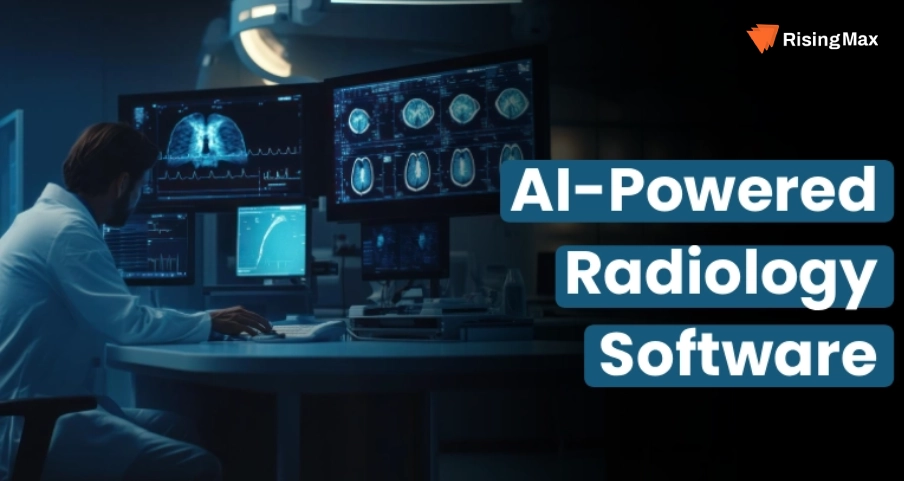
In the healthcare sector, a new age has been created due to the introduction of artificial intelligence in healthcare operations, particularly in imaging technology. The need for ai radiology software and ai medical imaging software is rising because health care institutions want to ensure better diagnosis, minimize human error, and achieve better results for patients.
Due to an increased number of cases involving chronic diseases and the aging population, the worldwide medical imaging market is growing at a remarkable pace. The use of artificial intelligence in diagnostics is becoming critical in the field of radiology. For example, AI diagnostic imaging can analyze images obtained from different scans, such as x-rays, MRI, and CT.
Key Trends:
- Increased adoption of medical imaging AI solutions in hospitals
- Growing reliance on AI for early disease detection
- Integration of cloud-based radiology platforms
- Rising demand for automation in diagnostic workflows
- Expansion of tele-radiology and remote diagnostics
Understanding how ai helps in medical imaging is crucial for healthcare providers looking to stay competitive in this evolving landscape.
What is AI Radiology?
AI radiology is the application of AI techniques like machine learning and deep learning in the analysis of medical imaging data for helping radiologists diagnose patients. It improves the traditional radiology procedures by reducing repetitive work and offering insights based on data.
Key Aspects:
- Automated Image Interpretation
AI algorithms analyze medical scans to detect patterns and abnormalities. This reduces dependency on manual interpretation and increases diagnostic speed. - Data-Driven Insights
AI processes large datasets to provide actionable insights. This helps radiologists make informed decisions with higher accuracy. - Decision Support Systems
AI tools act as assistants to radiologists by highlighting potential issues. These AI tools for radiologists improve efficiency and reduce diagnostic errors.
Why Invest in AI-Powered Radiology?
Investing in AI radiology software development is becoming a strategic priority for modern hospitals. AI enhances operational efficiency while improving patient care quality.
Reasons to Invest:
- Improved Diagnostic Accuracy
AI reduces human errors by identifying patterns that may be missed during manual analysis. This leads to more precise diagnoses and better treatment planning. - Faster Turnaround Time
AI-powered systems process images quickly, reducing delays in diagnosis. This is critical in emergency cases where time is crucial. - Scalability and Efficiency
AI solutions can handle large volumes of imaging data without compromising performance. This ensures scalability for growing healthcare facilities. - Competitive Advantage
Hospitals adopting AI gain a technological edge. It positions them as advanced healthcare providers in a competitive market.
Key Features of AI Radiology Software
Automated Image Analysis
The process of analyzing and detecting any anomalies like cancers or broken bones is done automatically by the software through image analysis in medicine. It reduces the workload on humans as well as saves time.
Real-Time Diagnostics Support
AI provides instant insights during image analysis, enabling faster clinical decisions. Radiologists can receive alerts and suggestions in real time. This improves efficiency in critical scenarios.
AI-Based Anomaly Detection
Advanced models identify subtle anomalies that may not be visible to the human eye. This enhances early detection of diseases. It significantly improves patient outcomes.
Integration with PACS/RIS Systems
AI software seamlessly integrates with existing hospital systems like PACS and RIS. This ensures smooth data flow and efficient workflow management. It eliminates the need for system overhauls.
Cloud-Based Storage and Access
Cloud integration allows secure storage and easy access to imaging data. Healthcare professionals can access reports remotely. This supports telemedicine and remote diagnostics.
Development Process of AI Radiology Software
Requirement Analysis
This phase involves understanding hospital needs, workflows, and compliance requirements. It helps define project scope and features. A clear roadmap ensures successful development.
Data Collection & Annotation
High-quality medical datasets are collected and annotated for training AI models. Accurate labeling is crucial for model performance. This step directly impacts the effectiveness of the solution.
Model Training (ML/DL Models)
Machine learning and deep learning models are trained using annotated data. These models learn to identify patterns and anomalies. Continuous training improves accuracy over time.
UI/UX Design
A user-friendly interface is designed for easy navigation and usability. Radiologists require intuitive dashboards for efficient workflows. Good design enhances user experience.
Testing & Deployment
The software undergoes rigorous testing to ensure accuracy and reliability. After validation, it is deployed in hospital environments. Continuous monitoring ensures optimal performance.
Technology Stack for AI Radiology Software Development
| Component | Technology |
| AI/ML Frameworks | TensorFlow, PyTorch |
| Backend | Node.js, Python |
| Frontend | React, Angular |
| Cloud Platforms | AWS, Azure, Google Cloud |
| Database | MongoDB, PostgreSQL |
| Imaging Standards | DICOM |
| APIs & Integration | HL7, FHIR |
| Security | HIPAA-compliant protocols |
| DevOps | Docker, Kubernetes |
AI Use Cases in Radiology Software
Disease Detection
AI identifies tumors, fractures, and abnormalities in medical images. It enhances early detection and improves diagnostic accuracy. This is one of the most impactful AI in radiology use cases.
Workflow Automation
AI automates repetitive tasks such as image sorting and data entry. This reduces workload for radiologists. It allows them to focus on complex cases.
Report Generation
AI uses NLP to generate radiology reports automatically. This speeds up documentation processes. It ensures consistency and accuracy in reporting.
Predictive Analysis
AI analyzes historical data to predict disease risks. This helps in preventive healthcare. It enables early intervention and better patient management.
Image Enhancement
AI improves image quality by reducing noise and enhancing clarity. This ensures better visualization of medical conditions. It leads to more accurate diagnoses.
Benefits of AI Radiology Software for Hospitals
Faster Diagnosis and Improved Accuracy
AI speeds up image analysis and reduces errors. This leads to quicker and more accurate diagnoses. It improves overall healthcare efficiency.
Reduced Workload for Radiologists
Automation reduces repetitive tasks and workload. Radiologists can focus on critical cases. This enhances productivity and job satisfaction.
Enhanced Patient Outcomes
Early detection and accurate diagnosis improve treatment outcomes. Patients receive timely care. This increases recovery rates.
Cost Optimization in Operations
AI reduces operational costs by improving efficiency. It minimizes errors and resource wastage. Hospitals can achieve better ROI.
Challenges in AI Radiology Software Development
Data Privacy and Compliance
Handling sensitive patient data requires strict compliance with regulations like HIPAA and GDPR. Ensuring data security is critical. Any breach can impact trust and reputation.
High-Quality Dataset Requirements
AI models require large, high-quality datasets for training. Obtaining and annotating such data is challenging. Poor data quality can affect model accuracy.
Integration with Existing Systems
Integrating AI with legacy systems can be complex. Compatibility issues may arise. Proper planning is required for smooth implementation.
Model Accuracy and Bias Issues
AI models must be trained carefully to avoid bias. Inaccurate models can lead to wrong diagnoses. Continuous monitoring and improvement are necessary.
Cost of AI Radiology Software Development
| Complexity Level | Estimated Cost |
| Basic Solution | $10,000 – $20,000 |
| Mid-Level Solution | $20,000 – $30,000 |
| Advanced AI Platform | $30,000 – $50,000+ |
Note: Costs depend on features, integrations, and level of AI sophistication.
Future Trends in AI Radiology Solutions
The future of AI radiology platform development is driven by innovation and advanced technologies. AI is expected to become an integral part of every radiology workflow.
Emerging Trends:
- AI-Assisted Diagnostics
AI will provide real-time decision support to radiologists, improving accuracy and speed. - Integration with IoT Devices
Smart medical devices will generate real-time data for analysis. This will enhance diagnostic capabilities. - Generative AI in Reporting
Automated report generation will become more advanced and accurate. - Tele-Radiology Expansion
Remote diagnostics will increase accessibility to healthcare services. - Personalized Healthcare
AI will enable tailored treatment plans based on patient data.
Conclusion
The use of AI in radiology will help improve the accuracy, efficiency, and results of diagnoses, giving hospitals an edge that will set them apart from others. With the help of AI radiology software, hospitals will be able to benefit from all the advanced technology that AI can offer.
The rising need for AI diagnostic software in the market requires hospitals to come up with a solution that can keep them ahead of the game. Choosing the best development company will pave the way for success in implementing the latest AI radiology systems..
FAQs
- How is AI used in radiology in the USA?
AI is used for image analysis, disease detection, and workflow automation. It improves accuracy and reduces diagnosis time. - What is the cost of AI radiology software development in the USA?
Costs range from $30,000 to $300,000+ depending on complexity. Advanced AI solutions require higher investment. - How does AI improve medical imaging in the USA?
AI enhances image quality, detects anomalies, and provides real-time insights. It supports faster and accurate diagnosis. - Can AI replace radiologists in the USA?
No, AI supports radiologists by improving efficiency. Human expertise is still essential for final diagnosis. - What technologies are used in AI radiology software?
Technologies include TensorFlow, PyTorch, cloud platforms, and DICOM standards. These ensure scalability and performance. - Is AI radiology software secure in the USA?
Yes, it follows HIPAA compliance and secure protocols. Data privacy and protection are top priorities. - What are the benefits of AI in radiology diagnostics?
AI improves accuracy, reduces workload, and enhances patient outcomes. It also optimizes hospital operations. - How long does it take to develop AI radiology software?
Development typically takes 4–9 months depending on features. Complex solutions may take longer.